


What Are the Legal Bedroom Requirements in California?
 Share
Share
98 min read
A legal bedroom in California is a room that meets state and local building code requirements for safety, habitability, and occupancy. To qualify as a bedroom, the space generally must meet minimum standards for square footage, ceiling height, emergency egress, natural light, ventilation, and permanent heating. These requirements are established through the California Residential Code and may be supplemented by local building regulations. For homeowners planning a remodel, ADU, garage conversion, room addition, or home sale, ensuring a bedroom is code-compliant can help avoid permitting issues, appraisal discrepancies, and potential complications during a real estate transaction. Proper designation of a room as a bedroom prevents legal disputes and ensures accurate appraisals and property tax assessments.
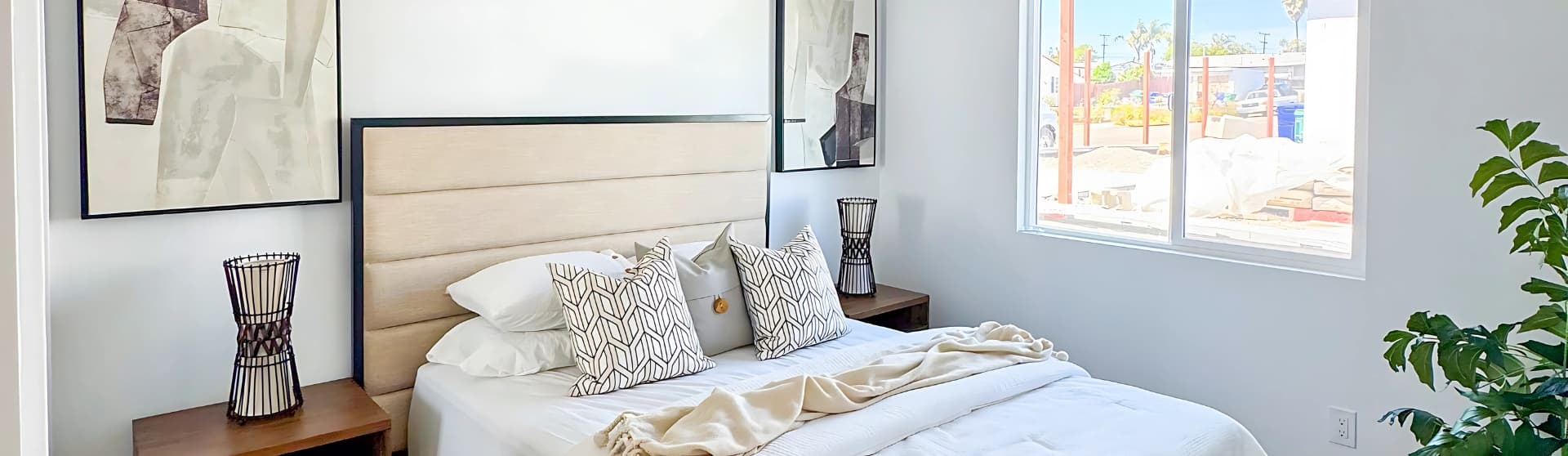

Why the "Legal Bedroom" Matters
A legal bedroom is more than a room with a bed. In California, bedrooms must meet specific building code requirements to be officially recognized as habitable living space. Whether you’re building an ADU, converting a garage, planning a room addition, or preparing to sell your home, compliance with California Building Code Standards can affect property value, appraisals, financing, and permit approvals.
Legal Recognition vs. Unpermitted Living Space
A room used as a bedroom is not automatically considered a legal bedroom. To qualify, it must meet California requirements for size, ceiling height, emergency egress, ventilation, natural light, and heating and cooling considerations that support habitability. If a room was built without permits or does not meet current code standards, it may be treated as unpermitted living space during a home sale, appraisal, or permit review.
Impact on Property Value and Resale Potential
Legal bedrooms can have a direct impact on a home’s value and marketability within the California real estate market. Buyers often search for homes based on bedroom count, making properly recognized bedrooms an important selling point. Property values may increase when rooms are recognized as legal bedrooms, contributing to overall property valuation and buyer appeal.
Why Accurate Bedroom Counts Matter During Appraisals
Appraisers and lenders use bedroom count when comparing similar properties and determining market value. Bedrooms significantly influence a home’s value, with more bedrooms often attracting a higher price and broader buyer interest. Accurate bedroom counts are crucial for appraisers, real estate agents, and lenders when assessing a home’s worth through comparable property evaluations. Bedrooms that meet California Building Code Standards are more likely to be recognized during the appraisal process.
What Are the Risks of Mislabeling a Room as a Bedroom?
Advertising a non-compliant room as a bedroom can create issues during inspections, appraisals, and financing reviews. Mislabeling rooms as bedrooms can lead to elevated price expectations among sellers and create potential home financing challenges for buyers.
Potential consequences include:
- Lower appraisal values
- Financing delays
- Buyer concerns
- Permit complications
- Contract renegotiations
Why Legal Bedrooms Matter for ADUs and Home Additions
Bedrooms in ADUs, room additions, and garage conversions must meet applicable building code requirements before they can be recognized as legal sleeping areas. Compliance with California State Housing Law and local building regulations helps ensure that remodeling projects can be safely occupied, support rental opportunities, and contribute to long-term property value. Planning for code compliance early in any home project can help homeowners avoid costly redesigns, failed inspections, and project delays.
Quick Summary
A legal bedroom can affect:
- Property value
- Property valuation and appraisals
- Financing approval
- Permit compliance
- Resale potential
- ADU and garage conversion projects
Before creating a new bedroom, verify that the space meets California requirements and any applicable local building standards.
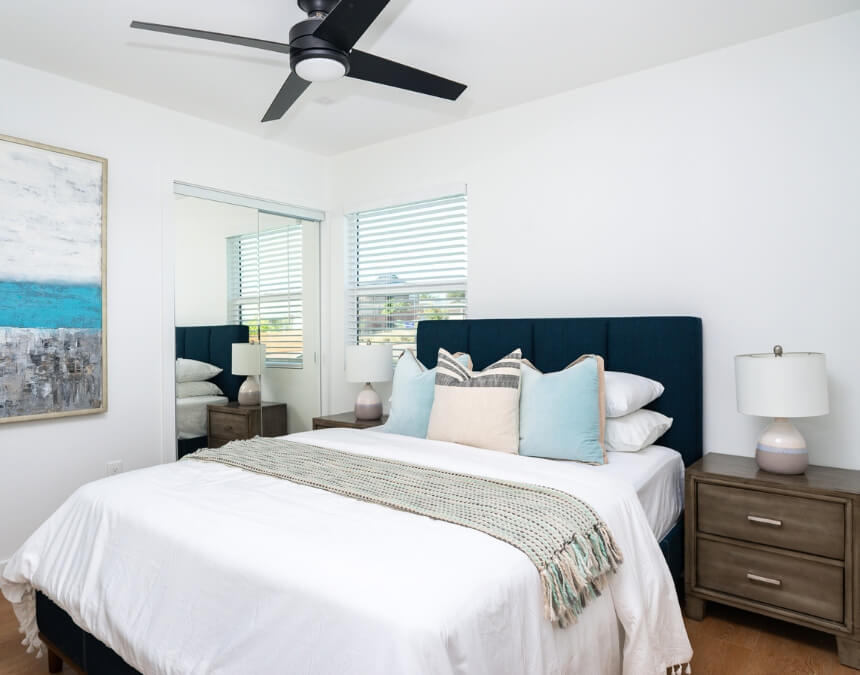
Ensuring a bedroom meets code requirements can help protect property value and reduce complications during appraisals and home sales.
What Are the Legal Requirements for a Bedroom in California?
A legal bedroom in California must meet specific requirements for size, ceiling height, emergency egress, natural light, ventilation, and heating. These standards help ensure bedrooms are safe, habitable, and suitable for occupancy. While the California Residential Code and International Residential Code establish many baseline requirements, local jurisdictions may adopt additional regulations that homeowners must follow.
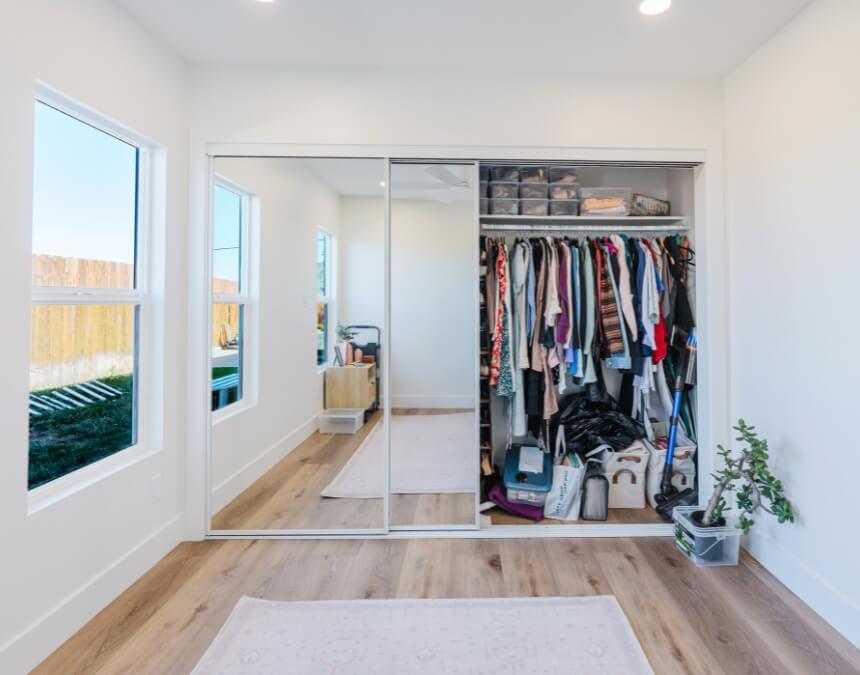
A legal bedroom must satisfy requirements for size, egress, ventilation, natural light, and heating—not just include a sleeping area.
California Building Code vs. Local Building Codes
California’s bedroom requirements are primarily governed by the California Residential Code and California Building Code. These statewide standards establish minimum requirements for habitability, safety, and basic building performance.
However, local building departments may adopt additional regulations based on local conditions, zoning requirements, wildfire considerations, historic preservation standards, or other community-specific concerns. In some cases, local governments may also have separate rules tied to the housing approval process, post-entitlement processing, or Post-Entitlement Permits for larger housing projects.
Certain local codes may impose stricter requirements than the California Building Code.
For example, homeowners in San Diego should verify requirements with the City of San Diego Development Services Department before beginning a room addition, ADU, garage conversion, or other remodeling project. This is especially important for any home project that changes occupancy, adds living space, or affects safety features such as a smoke detector, carbon monoxide detectors, ventilation, or egress.
To avoid costly delays or redesigns, it’s always a good idea to confirm applicable requirements with your local building department during the planning stage.
Quick Bedroom Requirements Checklist
Use the table below as a general guide to California bedroom requirements. Keep in mind that these are general California standards. Additional requirements may apply depending on your location and the type of project being completed.
| Requirement | California Standard |
|---|---|
| Minimum Floor Area | 70 square feet |
| Minimum Room Width | 7 feet |
| Ceiling Height | Generally 7 feet 6 inches minimum |
| Emergency Egress | At least one code-compliant door or window |
| Egress Window Opening | Minimum 5.7 square feet |
| Maximum Window Sill Height | 44 inches from the floor |
| Natural Light | Glazed window area equal to at least 8% of floor area |
| Ventilation | Operable window, transom window, or approved ventilation system |
| Heating | Permanent heat source capable of maintaining 70°F |
| Closet Required? | No, though built-in storage may improve functionality |
Minimum Square Footage and Bedroom Size Requirements
California establishes minimum size requirements for bedrooms to help ensure they are safe, functional, and suitable for occupancy. If you’re planning a room addition, garage conversion, ADU, or home remodel, understanding these requirements can help you avoid permit issues and costly redesigns while supporting a smoother design and permitting process.
The 70-Square-Foot Rule
A legal bedroom in California must measure at least 70 square feet, according to the California Residential Code. This minimum floor area requirement helps ensure occupants have adequate space for basic living activities and safe movement throughout the room. While 70 square feet is the minimum requirement, larger bedrooms often provide greater flexibility for smart furniture placement, storage solutions, and long-term functionality.
Minimum Horizontal Dimensions and Room Width
Meeting the minimum square footage requirement alone is not enough. The California Residential Code also requires each side of a bedroom to measure at least 7 feet. This means a room cannot qualify as a legal bedroom if it meets the minimum square footage but has a narrow layout that falls below the required width. These dimensional standards help ensure bedrooms are practical, comfortable, and usable for everyday living.
Requirements for Multiple Occupants
Additional space may be required when a bedroom is intended for more than one occupant. Under occupancy standards outlined in the California Residential Code, shared bedrooms generally require an additional 50 square feet per person. This is an important consideration for families designing children’s bedrooms, guest accommodations, ADUs, multigenerational living spaces, or projects intended to create additional housing opportunities.
When designing a shared bedroom, plan for additional floor area early to maintain comfort and comply with occupancy standards.
Common Bedroom Size Mistakes During Remodels
Bedroom size requirements are frequently overlooked during remodeling projects, especially in garage conversions, attic remodels, room additions, and renovations involving an older Victorian home. Homeowners often focus on maximizing usable space without verifying whether the room meets minimum code requirements.
Common mistakes include:
- Designing a bedroom with less than 70 square feet of floor area
- Creating narrow layouts that do not meet the 7-foot minimum dimension requirement
- Failing to account for occupancy requirements in shared bedrooms
- Assuming an existing room automatically qualifies as a legal bedroom
- Overlooking local building requirements during project planning
- Failing to verify requirements with the applicable Local Agency before construction begins
Reviewing bedroom dimensions early in the design phase can help streamline design and permitting efforts, prevent failed inspections, and reduce unexpected construction costs. Homeowners should also consider whether reasonable accommodations may be needed to improve accessibility and long-term usability.
| Requirement | California Standard |
|---|---|
| Minimum Bedroom Size | 70 square feet |
| Minimum Room Width | 7 feet |
| Minimum Room Length | 7 feet |
| Additional Space for Shared Occupancy | 50 square feet per additional occupant |
Ceiling Height Requirements for Legal Bedrooms
Ceiling height is an important part of California’s bedroom requirements because it affects safety, comfort, and habitability. A room that does not meet minimum ceiling height standards may not qualify as a legal bedroom, even if it satisfies other requirements such as square footage and egress.
The General Ceiling Height Standard
The California Residential Code generally requires a minimum ceiling height of 7 feet 6 inches for bedrooms. This standard helps ensure occupants have sufficient headroom and that the space feels functional and comfortable for everyday use.
When planning a room addition, garage conversion, ADU, or other home improvement project, it’s important to account for ceiling height early in the design process. Structural elements, HVAC systems, and insulation can all affect the final usable height of a room. Early planning can also help streamline design and permitting efforts and reduce the risk of costly revisions.
Sloped Ceilings in Older Homes and Attic Conversions
Older homes and attic conversions often feature sloped ceilings that can make compliance more challenging. However, a room may still qualify as a legal bedroom if at least 50% of the floor area meets the minimum ceiling height requirement established by the California Residential Code.
This exception allows some attic bedrooms and converted upper-level spaces to remain compliant while accommodating the architectural characteristics of the home. Homeowners considering attic conversions should carefully evaluate ceiling heights before beginning construction.
How Beams, Pipes, and Ductwork Affect Compliance
Exposed beams, plumbing lines, HVAC ductwork, and other structural components can reduce usable ceiling height and impact compliance. While these elements are common in remodels and conversions, they should be considered during the design phase to avoid creating areas that fall below minimum clearance requirements.
This is especially important in garage conversions, attic remodels, and residential spaces adapted from structures originally designed for other purposes, where existing conditions often limit available headroom.
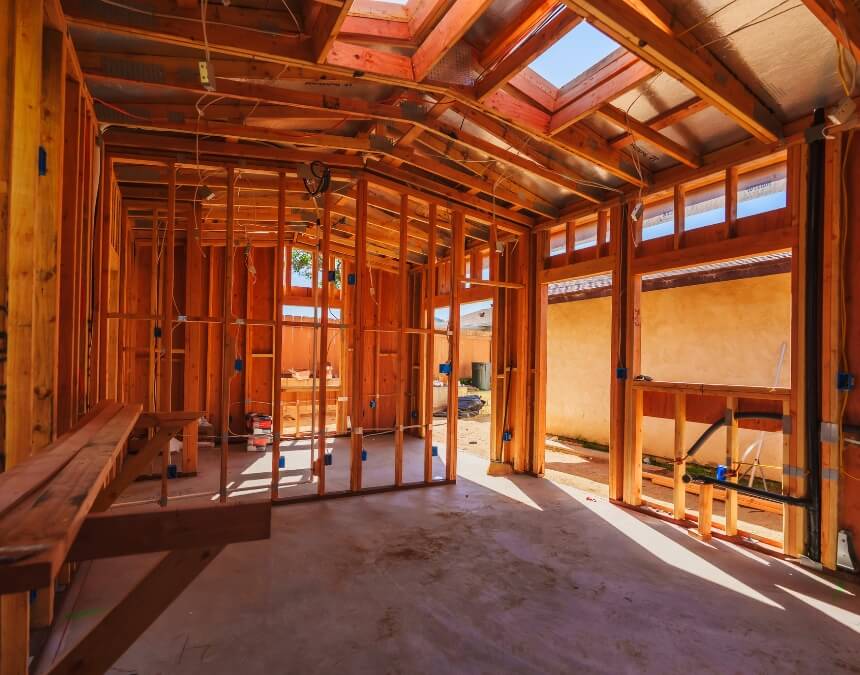
Evaluate structural and mechanical obstructions during design to ensure minimum ceiling height requirements can be achieved before construction begins.
When Low Ceilings Can Cause Permit Problems
Low ceilings are one of the most common reasons a proposed bedroom fails plan review or inspection. Even when a room meets minimum square footage requirements, insufficient ceiling height may prevent it from being approved as a legal bedroom.
To avoid permit delays, redesign costs, or failed inspections, homeowners should verify ceiling height requirements before finalizing plans. Consulting with a qualified contractor, designer, architect, or local building department can help identify potential compliance issues early in the project and support a smoother approval process.
| Ceiling Height Requirement | California Standard |
|---|---|
| Minimum Bedroom Ceiling Height | 7 feet 6 inches |
| Sloped Ceiling Exception | At least 50% of the room must meet the minimum height requirement |
| Applies To | Bedrooms, attic conversions, room additions, garage conversions, and ADUs |
Egress Requirements: Emergency Escape and Rescue Openings
Every legal bedroom in California must provide a safe way for occupants to exit during an emergency and for first responders to enter when necessary. These egress requirements are designed to support life safety during fires, medical emergencies, and other situations where a quick escape may be needed.
Why Every Bedroom Needs Emergency Egress
California requires bedrooms to have at least one emergency escape and rescue opening that provides direct access to the outside. In most cases, this requirement is satisfied through a properly sized egress window, although certain configurations may allow a door that opens directly to the exterior.
According to the California Residential Code, bedrooms must have at least one door or window that opens directly to the outside for emergency egress.
These requirements apply to standard bedrooms as well as bedrooms created through garage conversions, room additions, attic remodels, ADU projects, and some apartment complex renovations.
Minimum Egress Window Size Requirements
Not all bedroom windows qualify as emergency exits. To serve as a code-compliant egress window, the opening must meet minimum size requirements established by the California Residential Code.
The minimum openable area for an egress window is 5.7 square feet. Egress windows also generally need a minimum opening height of 24 inches and a minimum opening width of 20 inches so occupants can exit safely during an emergency.
Homeowners should be especially mindful of these requirements when replacing windows or converting existing rooms into bedrooms.
Maximum Window Sill Height Requirements
The location of the window is just as important as its size. To ensure occupants can reach the opening quickly during an emergency, the California Residential Code limits how high the window can be installed. The bottom of the window opening must be no more than 44 inches from the floor. Windows installed higher than this limit may require modifications before a room can qualify as a legal bedroom.
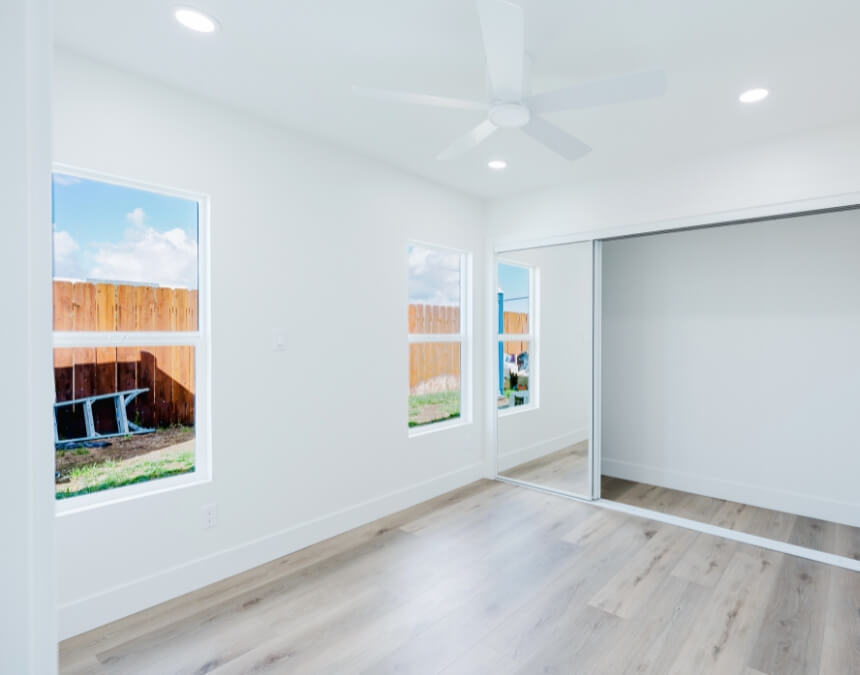
Keep egress window sill heights within code limits to ensure occupants can exit quickly during an emergency.
Security Bars, Grills, and Fire Safety Compliance
Security bars and window grilles are common in some homes, but they cannot block emergency escape. If bars or grilles are installed on a bedroom egress window, they must include an approved release mechanism that can be operated from inside the room without special tools or keys. The California Residential Code considers security window bars operable only if they have a safety release device.
Before installing security bars on bedroom windows, homeowners should verify that the system complies with local Buildings and Grounds requirements, building code rules, and fire safety standards.
Can a Bedroom Have Two Doors Instead of a Window?
Generally, no. While a bedroom may have multiple doors, California’s emergency egress requirements are intended to provide a direct path to the exterior of the home. Interior doors that lead to hallways, other rooms, or common living areas typically do not satisfy egress requirements on their own.
In most cases, a bedroom still needs a code-compliant egress window or an exterior door that opens directly outside. Homeowners planning a remodel, garage conversion, or ADU should confirm specific requirements with their local building department before finalizing plans.
| Egress Requirement | California Standard |
|---|---|
| Emergency Escape Opening | Required |
| Minimum Egress Window Opening | 5.7 square feet |
| Minimum Opening Height | 24 inches |
| Minimum Opening Width | 20 inches |
| Maximum Window Sill Height | 44 inches from the floor |
| Security Bars Allowed | Yes, if equipped with an approved safety release device |
| Exterior Door Alternative | May satisfy egress requirements if it opens directly outside |
Basement Bedroom Egress Requirements
Basement bedrooms can be legal in California, but they must meet the same safety and habitability standards as any other bedroom. One of the most important requirements is providing a code-compliant emergency escape and rescue opening that allows occupants to exit quickly during an emergency and enables first responders to enter if needed.
Can a Basement Bedroom Be Legal in California?
Yes, a basement bedroom can be legal in California if it complies with applicable building code requirements for egress, ceiling height, ventilation, heating, and occupancy. Homeowners often convert basements into guest rooms, rental spaces, or additional living areas, including projects that support Affordable Housing goals or multigenerational living arrangements. However, these projects must meet current code standards before the room can be recognized as a legal bedroom. Because basements are below ground level, they frequently present unique challenges that are not typically encountered in above-grade bedrooms.
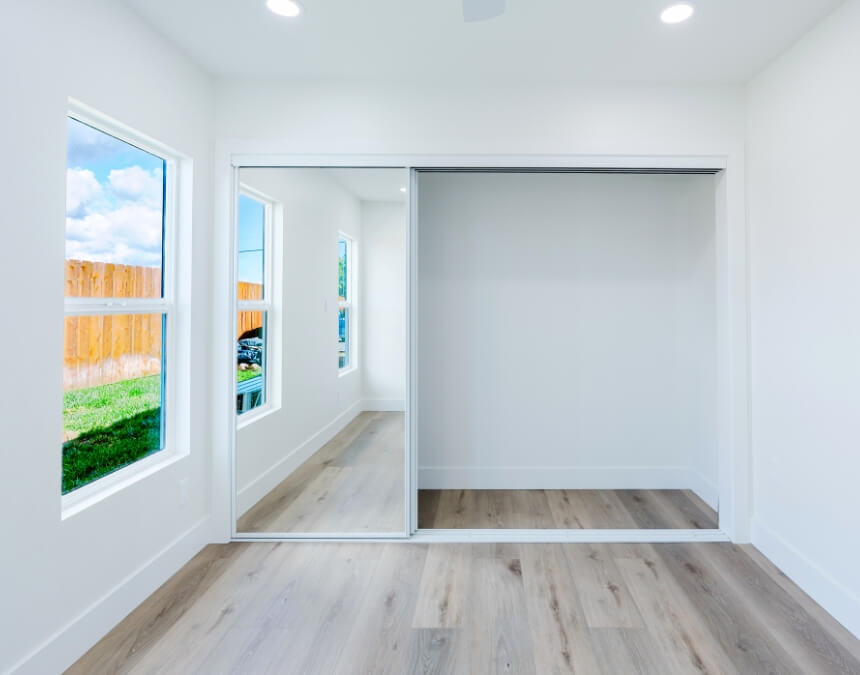
Before converting a basement into a bedroom, verify ceiling height, egress, and ventilation requirements to avoid permit and inspection issues.
Basement Window Requirements
Basement bedrooms need at least one emergency exit that opens directly to the outside under the California Residential Code. In most cases, this requirement is met through a code-compliant egress window. The window must satisfy minimum size and accessibility requirements so occupants can escape during an emergency and emergency personnel can gain access when necessary. If an existing basement window is too small or positioned too high above the floor, modifications may be required before the room can qualify as a legal bedroom.
Common Basement Conversion Compliance Issues
Basement conversions often face additional compliance challenges because these spaces were not originally designed for sleeping or long-term occupancy. One of the most common issues is insufficient ceiling height. Basement bedrooms often struggle with compliance due to ceiling height limitations, particularly in older homes where ductwork, plumbing lines, beams, or structural elements reduce usable headroom.
Other common challenges include:
- Inadequate egress windows or emergency exits
- Low ceiling heights caused by ductwork or structural obstructions
- Limited natural light
- Ventilation deficiencies
- Heating and climate control issues
- Moisture and water intrusion concerns
- Waste disposal or drainage issues in finished basement spaces
Because basement conversion requirements can vary depending on the home’s existing conditions, homeowners should verify compliance requirements before beginning construction. Addressing potential issues during the planning stage can help streamline design and permitting efforts, prevent permit delays, reduce redesign costs, and improve the likelihood of passing inspections.
| Basement Bedroom Requirement | California Standard |
|---|---|
| Emergency Escape Opening | Required |
| Direct Access to Exterior | Required |
| Egress Window | Must meet applicable California egress requirements |
| Ceiling Height | Must meet minimum bedroom ceiling height requirements |
| Ventilation | Required |
| Permanent Heating | Required |
| Natural Light | Required |
Natural Light and Ventilation Requirements
Natural light and ventilation are essential components of a legal bedroom in California. These requirements help create a healthier living environment, improve indoor air quality, and ensure bedrooms receive adequate daylight and airflow. A room that lacks sufficient natural light or ventilation may not qualify as a legal bedroom, even if it meets other code requirements.
Do Bedrooms Need Windows in California?
Yes. Every bedroom must have at least one window to supply both natural light and ventilation under the California Residential Code. Windows play an important role in maintaining indoor air quality and providing occupants with access to natural daylight. In most cases, a bedroom without a window will not satisfy California’s habitability requirements. This requirement is particularly important for homeowners converting garages, basements, or interior rooms into bedrooms, as these spaces may not have been originally designed with adequate window openings.
Minimum Window Area Requirements
California also establishes minimum requirements for the amount of natural light a bedroom must receive. The California Building Code requires that window space equal at least 8% of a bedroom’s floor area. For example, a 100-square-foot bedroom would generally require at least 8 square feet of window area to satisfy natural light requirements.
Providing adequate daylight can help improve comfort, reduce reliance on artificial lighting, and create a more inviting living space.
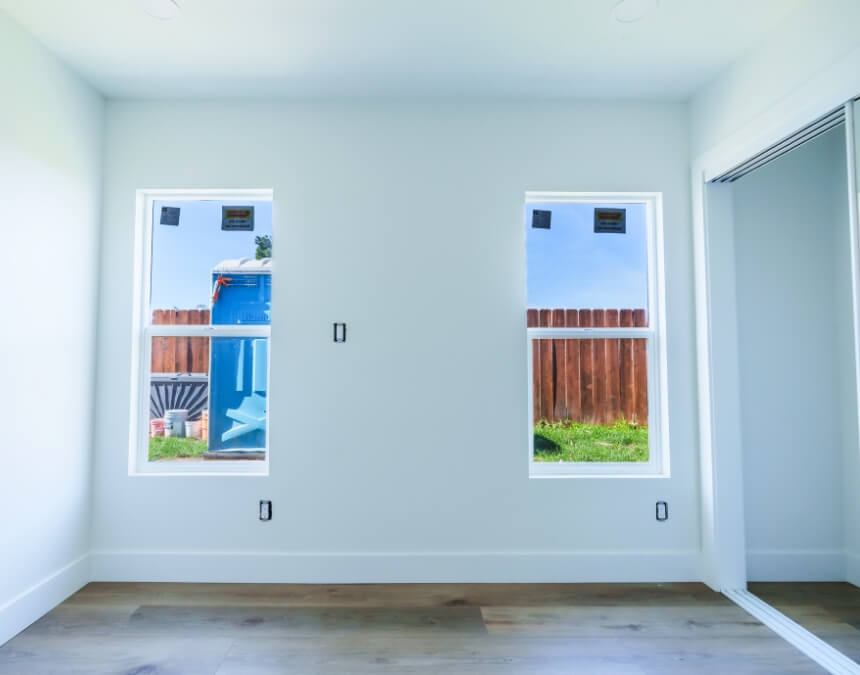
Adequate window area improves daylight, ventilation, and habitability while helping a bedroom meet California code requirements.
Ventilation Standards for Bedrooms
In addition to natural light requirements, bedrooms must also have adequate ventilation. Ventilation helps remove stale air, reduce indoor pollutants, and control moisture that can contribute to mold growth and poor indoor air quality. In most cases, operable windows provide the required ventilation. However, approved mechanical ventilation systems may be permitted in certain situations when they meet applicable building code requirements. Proper ventilation is especially important in tightly sealed homes, ADUs, and converted living spaces where airflow may be more limited.
Using Skylights and Alternative Window Solutions
When traditional windows are not feasible, alternative glazing options may help satisfy natural light requirements. According to the California Building Code, skylights and glass doors may be acceptable substitutes for traditional windows in certain situations. These alternatives are commonly used in attic conversions, ADUs, and room additions where wall space for conventional windows may be limited. However, homeowners should verify compliance with local building officials before finalizing design plans.
Common Ventilation Mistakes During Conversions
Ventilation issues are among the most common problems encountered during garage conversions, basement remodels, and ADU construction projects. Many existing spaces were not originally designed for long-term occupancy and may require upgrades to meet current standards.
Common ventilation mistakes include:
- Insufficient operable window area
- Blocking existing airflow pathways during remodeling
- Relying on inadequate mechanical ventilation systems
- Overlooking moisture control requirements
- Failing to account for ventilation during garage or basement conversions
Addressing ventilation requirements early in the design process can help streamline design and permitting efforts, prevent permit issues, improve indoor comfort, and support long-term bedroom functionality. This proactive approach benefits homeowners, contractors, and housing providers by helping ensure spaces remain safe, comfortable, and code-compliant.
| Natural Light & Ventilation Requirement | California Standard |
|---|---|
| Bedroom Window Required | Yes |
| Minimum Window Area | At least 8% of floor area |
| Natural Ventilation Required | Yes |
| Operable Window Allowed | Yes |
| Mechanical Ventilation Alternative | May be permitted if code-compliant |
| Skylights and Glass Doors | May be acceptable alternatives in certain situations |
Heating and Climate Control Requirements
Heating is a required component of a legal bedroom in California. State housing standards require bedrooms to have a permanent heat source capable of maintaining a safe and comfortable indoor temperature. A room that lacks adequate heating may not meet California’s habitability requirements, even if it satisfies other bedroom standards.
Does a Bedroom Need Heating in California?
Yes. California requires bedrooms to have a permanent heat source capable of maintaining a temperature of at least 70 degrees Fahrenheit, as outlined in the California Health and Safety Code. This requirement helps ensure bedrooms remain safe and habitable during colder weather conditions. Whether you’re converting a garage, finishing an ADU, or adding a new bedroom, heating should be incorporated into the design from the beginning of the project.
Permanent Heating Sources vs. Portable Space Heaters
Not all heating methods satisfy California’s requirements. To qualify as a legal bedroom, the heat source must be permanently installed and capable of consistently heating the space.
Common examples of acceptable heating systems include:
- Central HVAC systems
- Wall-mounted heaters
- Baseboard heating systems
- Other permanently installed heating equipment approved by local building officials
Portable space heaters do not meet California’s legal bedroom requirements because they are considered temporary heating solutions rather than permanent fixtures. Homeowners relying on portable heaters alone may encounter compliance issues during inspections, appraisals, or permit reviews.
HVAC Requirements for Bedroom Compliance
An efficient HVAC system can help homeowners satisfy heating requirements while also improving overall comfort and indoor air quality. In addition to maintaining adequate temperatures, properly designed HVAC systems can help manage airflow, reduce moisture buildup, and improve year-round livability. This is particularly important in California homes where energy efficiency, indoor comfort, and moisture control play a significant role in long-term building performance.
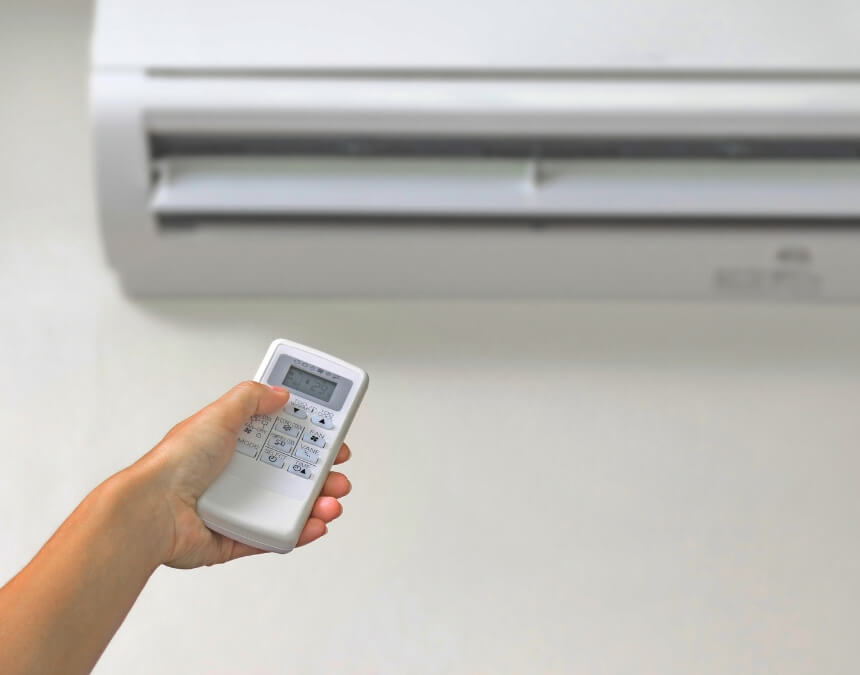
A permanent heating system is required for a legal bedroom and should be sized appropriately to maintain year-round comfort and code compliance.
Climate Control Considerations for ADUs and Additions
Heating and climate control are especially important when designing ADUs, garage conversions, and room additions. These spaces often have different insulation levels, exposure conditions, and airflow patterns than the main home. When planning a new bedroom, homeowners should consider:
- Proper HVAC sizing for the space
- Adequate insulation levels
- Air circulation and ventilation
- Energy efficiency goals
- Long-term comfort for occupants
Addressing climate control early in the design process can help streamline design and permitting efforts, prevent costly modifications later, and ensure the finished bedroom remains comfortable throughout the year. This proactive approach benefits homeowners, contractors, and housing providers by helping create safe, code-compliant living spaces that support long-term occupancy.
| Heating Requirement | California Standard |
|---|---|
| Permanent Heat Source Required | Yes |
| Minimum Temperature Capability | 70°F |
| Portable Space Heaters Allowed as Sole Heat Source | No |
| Central HVAC Systems | Acceptable |
| Wall Heaters | Acceptable |
| Baseboard Heating | Acceptable |
| Applies to ADUs, Additions, and Garage Conversions | Yes |
Does a Bedroom Need a Closet in California?
One of the most common misconceptions about bedroom requirements is that every bedroom must have a closet. While closets are commonly found in modern homes, California building codes do not require a built-in closet for a room to qualify as a legal bedroom.
The Truth About Bedroom Closet Requirements
California law does not require a built-in closet for a room to be classified as a legal bedroom, according to the City of San Bruno Bedroom Requirements Guide. Instead, a room’s classification as a bedroom is generally based on factors such as minimum size, ceiling height, emergency egress, natural light, ventilation, and heating. If those requirements are met, a room may qualify as a legal bedroom even if it does not contain a closet. This often surprises homeowners, buyers, and sellers because closets have become a standard feature in most newer homes.
Why Closets Are Not Required Under California Building Code
The California Residential Code focuses primarily on health, safety, and habitability standards rather than storage features. Because a closet is not considered essential for occupant safety or habitability, it is not included among the legal requirements for a bedroom. This is particularly common in older homes, historic properties, and some custom-built residences where bedrooms may have been designed without built-in closets. As long as the room meets applicable code requirements, it can still be recognized as a legal bedroom.
How Appraisers and Lenders View Bedrooms Without Closets
Although closets are not legally required, they are often expected by buyers and may influence how a room is perceived in the marketplace. While closets are not legally required, they are typically expected in modern homes and can enhance marketability. Appraisers, lenders, and real estate professionals generally evaluate a room based on its overall functionality and whether it satisfies applicable bedroom requirements. However, a bedroom without a closet may be viewed differently by potential buyers compared to a similar room with dedicated storage. As a result, homeowners should consider both legal requirements and buyer expectations when designing or remodeling a bedroom. Addressing storage needs early can also help streamline design and permitting decisions for larger renovation projects.
Storage Alternatives That Preserve Functionality
A bedroom can remain functional and attractive without a built-in closet. Many homeowners use alternative storage solutions that provide flexibility while preserving usable floor space.
Common options include:
- Freestanding wardrobes
- Armoires
- Built-in shelving systems
- Custom storage cabinets
- Closet organizers
- Walk-in storage areas adjacent to the bedroom
These solutions can help improve organization and usability while maintaining compliance with California bedroom requirements.
| Bedroom Closet Requirement | California Standard |
|---|---|
| Built-In Closet Required | No |
| Bedroom Classification Based on Closet Presence | No |
| Egress Required | Yes |
| Natural Light Required | Yes |
| Ventilation Required | Yes |
| Permanent Heating Required | Yes |
| Closet May Improve Marketability | Yes |
Garage Conversion Bedroom Requirements in California
Garage conversions are one of the most popular ways for California homeowners to add living space without expanding their home’s footprint. However, converting a garage into a legal bedroom requires more than adding drywall and flooring. The new space must meet the same building code requirements as any other bedroom, including standards for size, ceiling height, egress, natural light, ventilation, and heating.
Can a Garage Conversion Legally Become a Bedroom?
Yes. A garage conversion can legally become a bedroom if it complies with applicable state and local building codes. California also allows homeowners to convert garages into accessory dwelling units (ADUs), which has made garage conversions increasingly popular throughout the state as part of broader Affordable Housing initiatives.
The California Department of Housing and Community Development (HCD) recognizes garage conversions as one of several ways homeowners can create ADUs and additional living space. Recent Assembly Bill and Senate Bill measures adopted by the California Legislature have further encouraged ADU development by simplifying portions of the approval process.
Before construction begins, homeowners should verify permit requirements and local regulations with their building department to ensure the project can be approved as a habitable bedroom or ADU.
Bedroom Requirements for Garage Conversion Projects
A converted garage must satisfy the same requirements as any other legal bedroom in California. This includes meeting minimum standards for:
- Floor area and room dimensions
- Ceiling height
- Emergency egress
- Natural light
- Ventilation
- Permanent heating
- Building permits and inspections
Because garages were originally designed for vehicle storage rather than occupancy, they often require significant upgrades to meet modern residential standards.
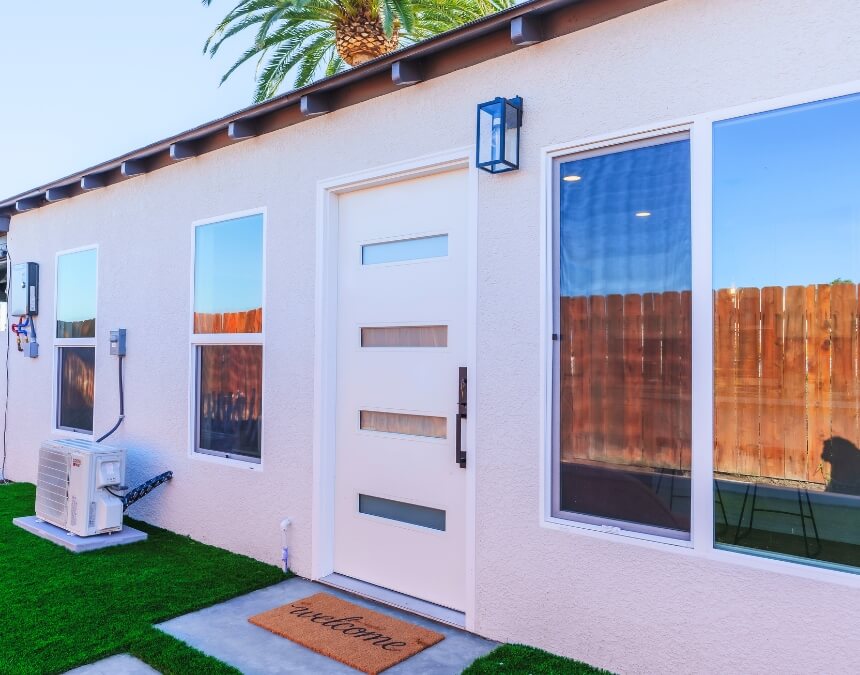
Garage conversions must meet the same bedroom code requirements as any habitable living space, including heating, egress, and ventilation standards.
Common Reasons Garage Conversion Bedrooms Fail Inspection
Garage conversions frequently encounter compliance issues because the original structure was not intended to function as living space. Converted basements or garages often face challenges related to ceiling height, egress, moisture control, and climate systems.
Some of the most common reasons garage conversion bedrooms fail inspection include:
- Insufficient ceiling height
- Missing or undersized egress windows
- Inadequate natural light
- Poor ventilation
- Lack of permanent heating
- Moisture intrusion issues
- Unpermitted construction work
- Failure to meet local building requirements
Addressing these issues during the design phase can help homeowners streamline design and permitting efforts, avoid costly corrections, and reduce project delays.
Garage Conversions vs. ADUs: What’s the Difference?
Although the terms are sometimes used interchangeably, a garage conversion and an ADU are not always the same thing. A garage conversion refers to converting an existing garage into habitable living space. Depending on the design, the converted space may become a bedroom, family room, home office, guest suite, or ADU.
An accessory dwelling unit (ADU) is a fully independent residential unit that typically includes:
- A sleeping area
- A bathroom
- A kitchen or kitchenette
- Separate living space
In other words, a garage conversion can become an ADU if it satisfies all applicable ADU requirements. However, not every garage conversion qualifies as an ADU. For homeowners considering additional living space, understanding this distinction can help determine the most appropriate design, permitting path, and long-term use for the project, particularly on urban or infill site properties where maximizing existing space is often a priority.
| Garage Conversion Requirement | Applies to Legal Bedroom |
|---|---|
| Minimum Bedroom Size | Yes |
| Ceiling Height Requirements | Yes |
| Emergency Egress | Yes |
| Natural Light Requirements | Yes |
| Ventilation Requirements | Yes |
| Permanent Heating Required | Yes |
| Building Permit Required | Yes |
| Inspection Required | Yes |
| May Be Converted Into an ADU | Yes |
ADU Bedroom Requirements in California
Accessory dwelling units (ADUs) have become an increasingly popular solution for California homeowners looking to create additional living space, support multigenerational households, or generate rental income. While California has streamlined many ADU regulations to support broader housing goals, bedrooms within ADUs must still comply with applicable health, safety, and habitability standards.
How Bedroom Requirements Apply to ADUs
Bedrooms in ADUs must generally meet the same requirements as bedrooms in a primary residence. This includes standards for minimum room size, ceiling height, emergency egress, natural light, ventilation, and permanent heating. According to the California Department of Housing and Community Development (HCD), ADUs must comply with minimum health and safety standards to ensure they provide safe and livable housing.
Whether you’re building a detached ADU, converting a garage, or creating an attached ADU, bedroom compliance should be incorporated into the project from the earliest planning stages. This can help avoid unnecessary delays during the housing approval process and reduce the need for design revisions later.
Bedroom Design Considerations for ADUs
Because ADUs are typically smaller than primary residences, efficient bedroom design is especially important. Homeowners often need to balance functionality, comfort, storage, and code compliance within a limited footprint.
When designing an ADU bedroom, consider:
- Minimum room size requirements
- Ceiling height limitations
- Window placement for natural light and ventilation
- Egress window requirements
- Heating and climate control needs
- Privacy and room layout
- Storage solutions that maximize usable space
Thoughtful planning can help create a comfortable bedroom while ensuring the ADU remains compliant with applicable building standards. In compact ADUs, smart space planning can make the room feel more comfortable without compromising legal requirements.
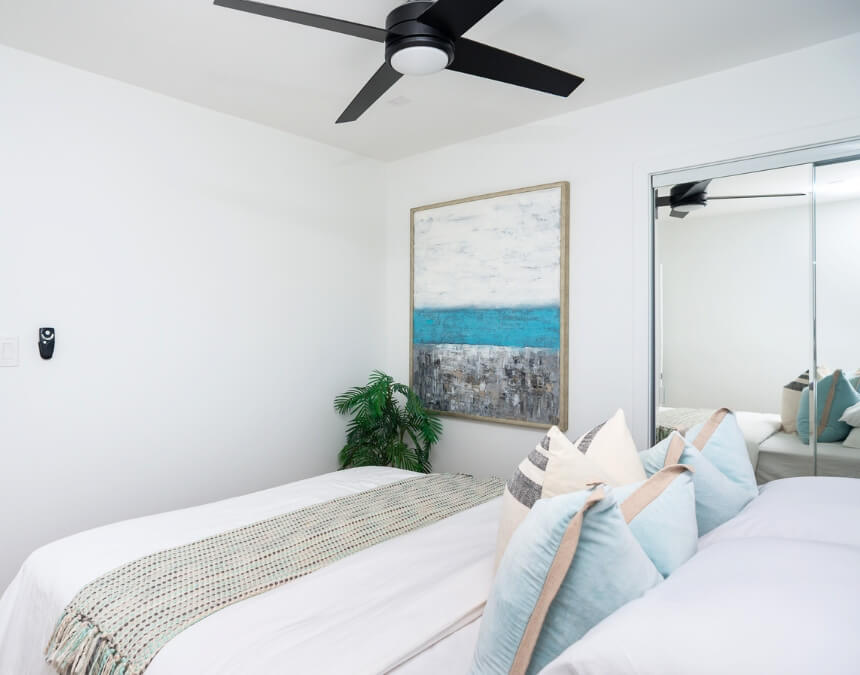
Prioritize egress, natural light, and efficient layouts early in the design process to maximize comfort while maintaining ADU bedroom compliance.
Common ADU Bedroom Compliance Mistakes
Many ADU projects encounter delays because bedroom requirements were overlooked during the design process. While California has simplified many ADU regulations, homeowners must still satisfy all applicable bedroom and habitability requirements.
Common compliance mistakes include:
- Designing bedrooms that do not meet minimum size requirements
- Failing to provide code-compliant egress windows
- Insufficient natural light or ventilation
- Inadequate heating systems
- Ceiling heights that fall below minimum requirements
- Poor space planning that limits functionality
- Beginning construction before obtaining required permits
Addressing these issues early can help homeowners avoid costly redesigns, permit delays, and failed inspections while ensuring the finished ADU provides safe and comfortable living space. For ADUs located near a Major Transit Stop or on smaller infill properties, careful bedroom planning is especially important because every square foot must work efficiently.
| ADU Bedroom Requirement | Applies to ADUs |
|---|---|
| Minimum Bedroom Size | Yes |
| Ceiling Height Requirements | Yes |
| Emergency Egress Required | Yes |
| Natural Light Required | Yes |
| Ventilation Required | Yes |
| Permanent Heating Required | Yes |
| Building Permit Required | Yes |
| Inspection Required | Yes |
| Must Meet Health and Safety Standards | Yes |
Accessibility, Privacy, and Bedroom Layout Considerations
A legal bedroom should not only meet California’s building code requirements but also provide reasonable privacy, accessibility, and functionality for everyday living. Thoughtful bedroom layouts can improve comfort, usability, and long-term value while helping homeowners avoid design issues during remodeling projects.
Direct Access Requirements
Bedrooms should be directly accessible from a hallway, living room, or other common area rather than requiring occupants to pass through another bedroom. This layout helps preserve privacy and supports functional living arrangements for homeowners, family members, guests, and tenants. Direct access is particularly important in room additions, ADUs, garage conversions, and multigenerational living spaces where privacy and independent access can significantly improve the usability of the home. When planning a remodel, homeowners should consider how people will enter and exit the room without disrupting adjacent living spaces.
Privacy and Functional Design Standards
Privacy is one of the key characteristics that distinguishes a bedroom from other living areas. A well-designed bedroom should provide occupants with a dedicated space for sleeping, resting, and personal activities.
Functional bedroom layouts typically include:
- Convenient access from common areas
- Adequate space for furniture placement
- Natural light and ventilation
- Easy access to nearby bathrooms
- Sufficient storage solutions
- Clear pathways for movement throughout the room
When designing a new bedroom, homeowners should balance code compliance with practical considerations that improve comfort and day-to-day functionality. In some situations, privacy and accessibility features may also support reasonable accommodations for occupants with specific needs.
Accessibility Considerations During Remodels
Accessibility is becoming an increasingly important consideration for homeowners planning room additions, ADUs, aging-in-place renovations, or multigenerational living arrangements. Although accessibility requirements vary depending on the project type, incorporating accessibility-friendly design features can improve long-term usability and future flexibility. Examples may include:
- Wider doorways
- Barrier-free transitions between rooms
- Adequate maneuvering space
- Accessible hardware and controls
- Strategic furniture placement
These features may also benefit occupants who rely on mobility aids or a service animal. While bedroom design requirements are separate from fair housing regulations, homeowners should be aware that laws such as the Fair Housing Act and California’s Fair Employment and Housing Act help protect individuals from housing discrimination based on a protected characteristic.
Considering accessibility during the design phase can help streamline design and permitting efforts and is often more cost-effective than making modifications after construction is complete.
| Bedroom Layout Consideration | Why It Matters |
|---|---|
| Direct Access from Common Areas | Improves privacy and functionality |
| Private Sleeping Space | Supports occupant comfort |
| Adequate Circulation Space | Improves usability |
| Natural Light and Ventilation | Enhances livability |
| Accessible Design Features | Supports long-term flexibility |
| Functional Furniture Layout | Improves everyday use |
How to Legalize an Existing Non-Permitted Bedroom
A non-permitted bedroom can create challenges during a home sale, appraisal, refinancing, or future remodeling project. Fortunately, many non-compliant bedrooms can be legalized through the proper permitting and inspection process. The first step is determining whether the room meets California’s requirements for size, ceiling height, egress, natural light, ventilation, and heating.
Signs Your Bedroom May Not Be Code-Compliant
If you’re unsure whether a room qualifies as a legal bedroom, there are several warning signs to watch for.
Common indicators include:
- No building permits on record for the conversion or addition
- Missing or undersized egress windows
- Insufficient ceiling height
- Inadequate natural light or ventilation
- No permanent heating source
- Room dimensions that do not meet minimum requirements
- A garage, attic, basement, or bonus room converted without approval
If any of these issues apply to your space, it may be worth consulting a contractor, designer, or local building department to determine whether upgrades are needed.
The Bedroom Legalization Process
Legalizing a non-permitted bedroom typically involves bringing the room into compliance with current building codes and obtaining the necessary approvals from the local building department. Design plans for bedrooms that do not meet California code requirements generally will not receive permit approval until deficiencies are corrected.
While every jurisdiction has its own process, the legalization process often includes:
- Evaluating the existing room conditions
- Identifying code deficiencies
- Preparing plans or drawings
- Applying for permits
- Completing required upgrades
- Scheduling inspections
- Receiving final approval
The exact requirements may vary depending on the age of the home, the scope of work, and local regulations. In some situations, homeowners may be required to submit additional documentation or a documented alternative plan if unique site conditions affect compliance.
Working With Your Local Building Department
Working with the local building department early in the process can help homeowners avoid unnecessary delays and costly mistakes. Engaging with the building permits office early in the renovation or construction process can help prevent potential legal challenges by ensuring code compliance.
Local building officials can help clarify applicable requirements, identify permit needs, and explain any jurisdiction-specific regulations that may affect the project. For homeowners in San Diego, permit information is available through the City of San Diego Development Services Department. Early communication can also help streamline design and permitting efforts, making it easier to identify potential issues before construction begins.
Common Permit Challenges and How to Avoid Them
Permit challenges often occur when homeowners begin construction without fully understanding local requirements or assume an existing room automatically qualifies as a bedroom.
According to the City of San Diego Development Services Department, a building permit is required to construct any new structure or improve existing buildings and other structures.
Common permit challenges include:
- Missing documentation or plans
- Insufficient ceiling height
- Egress window deficiencies
- Heating or ventilation issues
- Unpermitted prior construction
- Local zoning restrictions
- Delayed inspections
To avoid these issues:
- Verify permit requirements before starting work
- Confirm bedroom code requirements during design
- Work with qualified professionals when needed
- Schedule inspections promptly
- Communicate with your local building department throughout the project
Taking these steps early can reduce delays, minimize redesign costs, and improve the likelihood of obtaining final approval for your legalized bedroom.
| Bedroom Legalization Step | Purpose |
|---|---|
| Evaluate Existing Conditions | Identify compliance issues |
| Review Applicable Codes | Determine required upgrades |
| Prepare Plans | Support permit applications |
| Apply for Permits | Obtain official approval |
| Complete Required Improvements | Bring room into compliance |
| Schedule Inspections | Verify work meets code |
| Receive Final Approval | Legalize the bedroom |
Professional Perspectives: How Bedrooms Affect Real Estate and Financing
Legal bedroom status can affect how a home is marketed, appraised, financed, and evaluated by buyers. Even if a room is attractive and functional, real estate professionals, appraisers, and lenders may treat it differently if it does not meet bedroom requirements or lacks proper permits.
How Real Estate Agents Define Bedrooms for MLS Listings
Real estate agents typically rely on a mix of building code requirements, local market expectations, and available property records when determining how to describe bedroom count in a listing. Accurate bedroom counts are crucial because they can influence a home’s value, attract different buyer pools, and affect pricing strategy in the local real estate market. For sellers, overstating bedroom count can create problems later in the transaction if the room does not meet legal or functional expectations.
Appraisal Standards vs. Building Code Standards
Building code standards and appraisal standards are related, but they are not always identical. Building codes focus on health, safety, and habitability, while appraisers evaluate how the market recognizes and values the space. Discrepancies between building codes and real estate appraisal standards can create challenges when determining whether a room should be counted as a bedroom. For example, a room may meet certain code requirements but still raise questions during appraisal if it lacks features buyers commonly expect, such as a closet, privacy, or functional layout.
How Non-Conforming Bedrooms Affect Financing
Non-conforming or unpermitted bedrooms can affect financing because lenders often rely on appraisals to determine property value and loan eligibility. Assessors or appraisers may not factor in non-permitted additions when determining the value of a home, which can affect mortgage eligibility. This can create challenges if a seller prices the home based on an unofficial bedroom count, but the appraiser or lender does not assign the same value to the space.
Why Homebuyers Care About Legal Bedrooms
Homebuyers care about legal bedrooms because they want confidence that the home is safe, properly permitted, and accurately represented. A bedroom that does not meet legal requirements may raise concerns about safety, resale value, insurance, financing, or future remodeling plans. For buyers, legal bedrooms provide greater clarity. For sellers, properly documented bedrooms can reduce transaction risk and support stronger buyer confidence. In broader housing contexts, fair housing rules can also influence how housing providers communicate property features, tenant qualifications, and access to housing. However, for most residential homeowners, the main concern is ensuring bedroom count is accurate, permitted, and aligned with buyer expectations.
| Professional Perspective | Why Bedroom Legality Matters |
|---|---|
| Real Estate Agents | Helps support accurate MLS listings |
| Appraisers | Affects comparable property evaluations |
| Lenders | May influence loan approval and underwriting |
| Buyers | Builds confidence in safety and value |
| Sellers | Reduces transaction delays and disputes |
| Homeowners | Supports long-term resale and remodeling plans |
Final Thoughts: Planning a Bedroom Addition, ADU, or Garage Conversion in California
Building a legal bedroom in California requires more than adding walls and a door. To qualify as a bedroom, the space must meet requirements for size, ceiling height, emergency egress, natural light, ventilation, and heating. Whether you’re planning a room addition, garage conversion, ADU, or remodel, addressing these requirements early can help prevent permit delays, failed inspections, and costly corrections later. Working with your local building department can help clarify applicable requirements and ensure your project complies with current regulations.
For homeowners in San Diego, the City of San Diego Development Services Department provides guidance on building permits, inspections, and zoning requirements. By understanding California’s bedroom requirements before construction begins, homeowners can create safe, comfortable, and code-compliant living spaces that support long-term functionality and property value.
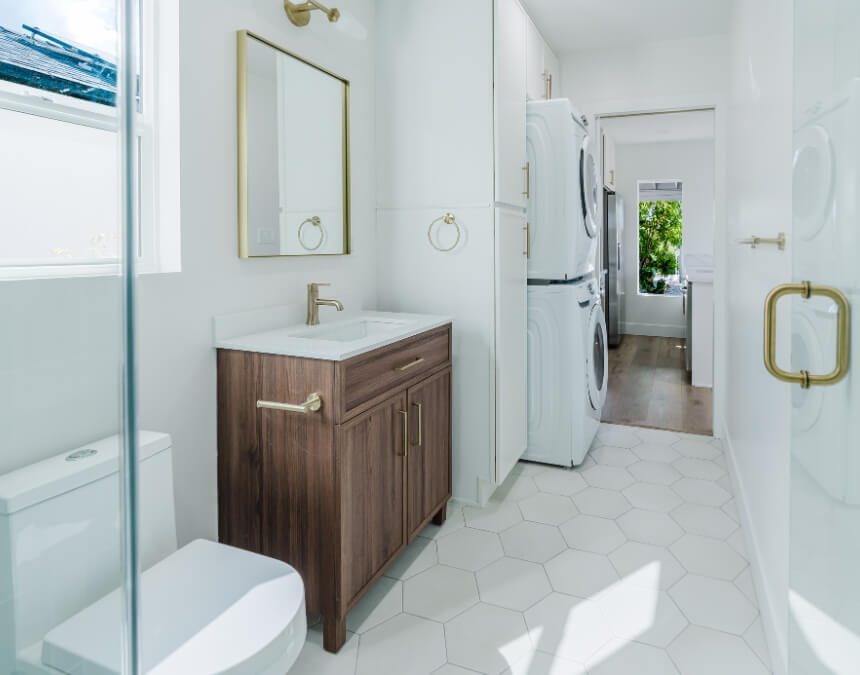
Successful bedroom additions start with code compliance planning, helping homeowners avoid costly redesigns and project delays.
Frequently Asked Questions
A legal bedroom in California must meet specific requirements for minimum size, ceiling height, emergency egress, natural light, ventilation, and heating. The room generally must provide at least 70 square feet of floor area, have a minimum dimension of 7 feet in each direction, include an emergency escape opening, and contain a permanent heat source.
A legal bedroom is a room that meets California’s health, safety, and habitability standards. To qualify, the room must satisfy building code requirements related to floor area, ceiling height, emergency egress, natural light, ventilation, and heating. Local jurisdictions may also impose additional requirements beyond statewide codes.
Yes. California generally requires a bedroom to contain at least 70 square feet of floor area and have a minimum width of 7 feet. Bedrooms must also have at least one window that provides natural light and ventilation, with window area typically equal to at least 8% of the room’s floor area. Additionally, bedrooms must include a code-compliant emergency egress window or exterior door.
California requires bedrooms to have an emergency escape and rescue opening that allows occupants to exit during an emergency and enables first responders to enter if necessary. Egress windows must meet minimum size requirements and be accessible from within the room. Security bars or grilles must include an approved release mechanism that can be operated from the inside.
Ventilation and egress are essential components of a legal bedroom. Ventilation requirements help maintain indoor air quality and reduce moisture buildup, while egress requirements provide a safe emergency exit. A room that lacks adequate ventilation or a code-compliant egress opening may not qualify as a legal bedroom, even if it meets other requirements.
Yes. California does not require a built-in closet for a room to be classified as a legal bedroom. Instead, the room’s classification depends on whether it meets requirements for size, ceiling height, egress, natural light, ventilation, and heating. While closets are common in modern homes and may improve marketability, they are not a legal requirement.
Legal bedroom requirements can affect property value, appraisals, financing, and resale potential. Bedrooms that meet code requirements are more likely to be recognized during appraisals and real estate transactions. Non-compliant or unpermitted bedrooms may not be counted toward a home’s official bedroom total, which can impact valuation and buyer confidence.
More Blogs
-

ADU Trends & Insights
Using a HELOC to Fund an ADU in California?
A HELOC lets California homeowners fund an ADU in phases using home equity, paying interest only on what they use. In San Diego, strong rental income often offsets payments, though variable rates and post–draw-period repayment increases should be considered.
-
ADU Trends & Insights
What Is ADU Rental Income and Why Are California Homeowners Investing in It?
Explore how to maximize rental income from an ADU with tips on design, rental strategies, and legal considerations to turn your ADU into a profitable investment.
-
ADU Trends & Insights
ADU vs JADU: What’s the Difference?
Explore the crucial differences between ADUs and JADUs—including size, regulations, costs, and ROI—to determine the best fit for your property and goals.
-

ADU Trends & Insights
Should You Invest in Building an ADU in San Diego?
Building an ADU in San Diego can be a worthwhile investment for homeowners looking to generate rental income, increase property value, or create flexible living space for family members. An Accessory Dwelling Unit (ADU) is a secondary residential unit built on the same lot as a primary home, and demand for ADUs continues to grow […]
-

ADU Trends & Insights
Are Pre-Approved ADU Plans Right for You in San Diego?
Compare pre-approved vs. custom plans and why the cheapest option isn't always best.
-
ADU Trends & Insights
How Does ADU Construction Work in San Diego, CA?
San Diego’s ADU process is fast and flexible, with permits approved within 60 days and options for detached units up to 1,200 sq. ft. or garage conversions. Thanks to state laws and the city’s ADU Bonus Program, homeowners can build quickly, add value, and even earn extra units by including affordable housing.
-

ADU Trends & Insights
What Are ADU Electrical Requirements in California?
Get the complete breakdown of electrical requirements for ADUs in California, from panel upgrades to solar compliance, to help you build safely and within code.
-

ADU Trends & Insights
Setback Requirements for ADUs in San Diego
Ensure your ADU meets California's setback requirements—learn essential rules, local variations, and expert tips to maximize your space and streamline permitting.
-

ADU Trends & Insights
How Do You Integrate Outdoor Living Into ADU Design?
Integrating outdoor living features such as patios, decks, and seamless indoor-outdoor connections helps ADUs feel larger, more livable, and more valuable.
-

ADU Trends & Insights
How do ADUs benefit real estate agents in California and San Diego?
ADUs benefit real estate agents in California and San Diego by increasing property value and buyer appeal, creating built-in rental and multigenerational living opportunities, and giving ADU-savvy agents a competitive edge in pricing, marketing, and closing deals in a tight housing market.
-

ADU Trends & Insights
What Is ADU Project Management?
ADU project management is the process of overseeing every stage of an accessory dwelling unit project to ensure it stays on schedule, within budget, and compliant with local regulations. It involves coordinating architects, contractors, and inspectors while managing permits, timelines, and construction milestones. Effective project management also includes tracking costs, minimizing delays, and maintaining clear […]
-
ADU Trends & Insights
What is the importance of an ADU feasibility study in California and San Diego?
An ADU feasibility study is a comprehensive analysis of zoning, site constraints, existing utilities, and a proposed design that determines whether building an accessory dwelling unit is practical and financially viable on a specific property.
-
ADU Trends & Insights
Garage ADU: What It Is, Costs, Rules, and Conversion Options
Unlock your property's potential by converting your detached garage into a cost-effective, versatile ADU that increases property value and generates rental income.
-

ADU Trends & Insights
What Makes an Ideal Lot for an ADU in California (Especially San Diego)?
An ideal ADU lot in California (especially San Diego) is flat or gently sloped with enough clear buildable space for setbacks, good construction access, nearby utility tie-ins, and minimal easements or overlays—since slope, access, and utility distance are the biggest drivers of cost and feasibility even with “by-right” ADU rules.
-

ADU Trends & Insights
How Do You Compare ADU Builder Quotes in San Diego and California?
Compare itemized ADU quotes—labor, materials, permits, timelines—to ensure transparent pricing, true value, and no surprise costs.
-

ADU Trends & Insights
Should You Build Your ADU Yourself or Hire a Contractor in San Diego, California?
Building your own ADU in San Diego can save on labor and contractor markup, but it’s essentially managing a small-house build with permits, trades, and inspections—so hiring an experienced contractor (or using a hybrid approach) often reduces delays, risk, and costly mistakes.
-

ADU Trends & Insights
When Should You Build an ADU in San Diego?
ADU construction involves planning, permitting, and building a self-contained living space on a residential property — adding value, flexibility, and income potential without buying new land. In California, ADUs now make up about one in six new homes, reflecting their growing role in solving the state’s housing shortage.
-
ADU Trends & Insights
Construction Loans vs. Personal Loans for ADUs: What Do California Homeowners Need to Know?
Building an ADU in California typically requires high financing and San Diego homeowners usually choose between construction loans, which are based on the future value of the property, and personal loans, which offer fast approval but higher interest rates.
-
ADU Trends & Insights
Spanish Style ADUs
Explore the timeless elegance of Spanish-style ADUs with iconic features like stucco walls, red tile roofs, and stunning architectural details.
-
ADU Trends & Insights
Best ADU Designs
Explore essential ADU design trends and practical insights, from layout optimization to style choices, ensuring your accessory dwelling unit maximizes comfort, functionality, and investment potential.
-

ADU Trends & Insights
Where Can ADUs be Built in San Diego, CA?
ADUs are allowed on nearly all residential lots in California, including single-family and multifamily properties, under state law. In San Diego, any property zoned for residential use qualifies, making it easier than ever for homeowners to add an ADU and expand their living or rental space.
-

ADU Trends & Insights
Why Do You Need an Experienced ADU Builder in California?
An experienced ADU builder helps homeowners navigate California’s complex permitting rules, zoning regulations, and construction requirements while avoiding costly mistakes and delays. Accessory Dwelling Units (ADUs) are secondary housing units built on the same property as a primary residence and can include detached backyard homes, attached additions, garage conversions, or basement apartments with independent living […]
-

ADU Trends & Insights
Is it Worth It To Build An ADU in 2026? Assessing the ROI of Building an ADU
Discover the financial benefits and pitfalls of building an ADU with our comprehensive, detailed guide.
-
ADU Trends & Insights
What Is ADU Construction?
ADU construction involves planning, permitting, and building a self-contained living space on a residential property — adding value, flexibility, and income potential without buying new land.
-
ADU Trends & Insights
What Are the Key Differences Between Attached and Detached ADUs in California?
An attached ADU shares at least one wall or structural connection with the primary residence, while a detached ADU is a standalone structure located on the same property. Both provide complete independent living facilities, including areas for living, sleeping, cooking, and sanitation, but they differ in privacy, construction requirements, utility infrastructure, design flexibility, and rental […]
-
ADU Trends & Insights
How Do You Design the Perfect Granny Flat?
Designing the perfect granny flat starts with understanding local ADU regulations, defining the unit’s intended use, and planning a layout that maximizes comfort within a compact footprint. In California, granny flats—legally classified as Accessory Dwelling Units (ADUs)—must comply with state and local rules covering size, setbacks, and permitting. A successful design balances budget, livability, and […]
-
ADU Trends & Insights
What Is an ADU Cost Breakdown?
An ADU cost breakdown shows where your budget goes—hard construction costs (about 85–90%) versus soft costs like plans, permits, and city fees (about 10–15%)—so you can set realistic expectations and avoid surprises.
-
ADU Trends & Insights
Prefab ADUs: Pros and Cons
Explore the pros and cons of prefab ADUs in California, including cost, customization, durability, and ROI, to decide if modular construction suits your needs.
-

ADU Trends & Insights
What Are the Best Loan Programs for ADUs in California (San Diego Guide)?
California homeowners can finance ADUs through home equity, construction or renovation loans, cash-out refinancing, and programs like CalHFA (when available) and San Diego’s SDHC, with the best option depending on equity, income, and timing.
-

ADU Trends & Insights
Why ADUs & Costs Matter in San Diego
Planning an ADU in San Diego? Get the lowdown on all the hidden costs that can catch you off guard.
-

ADU Trends & Insights
How Does Choosing the Right Color Scheme Impact an ADU’s Design and Value?
Choosing the right ADU color scheme—especially light, neutral palettes with intentional accents—can make small spaces feel larger, improve livability, and increase rental and long-term property value.
-

ADU Trends & Insights
What Are the ADU Electrical Requirements in California in 2026?
California ADUs must comply with strict electrical and energy regulations under the California Electrical Code (CEC) and Title 24 energy standards. Most ADUs require detailed planning for electrical panels, load calculations, dedicated circuits, solar readiness, and utility coordination to meet modern safety and efficiency requirements. Homeowners in San Diego and across California often underestimate the […]
-

ADU Trends & Insights
What Is a Casita? Definition, Uses, and How It’s Different From an ADU
Casitas are stylish, small ADUs under 800 sq. ft., perfect for guests, rentals, or in-law suites. Discover the benefits, costs, and designs.
-

ADU Trends & Insights
ADU Manufactured Homes in San Diego: Are They Right for You?
Discover whether a manufactured home is the right choice by exploring costs, regulations, benefits, and potential drawbacks.
-
ADU Trends & Insights
What Is a Granny Flat? Definition, Types, and How They’re Used
Granny flats offer San Diego homeowners flexible housing solutions, from accommodating family to generating rental income, with options including detached builds, garage conversions, or junior ADUs.
-

ADU Trends & Insights
How to Build an ADU in the San Diego Coastal Zone
Building an ADU in San Diego’s Coastal Zone requires checking if the property is in the Coastal Overlay Zone, which typically triggers a Coastal Development Permit or exemption.
-
ADU Trends & Insights
SB9 vs ADU: What’s the Difference and Which Is Better?
While promising, the complexity and lengthy approval process of SB9 projects make traditional accessory dwelling units (ADUs) an often simpler and quicker alternative for expanding property use.
-

ADU Trends & Insights
Key Differences Between Pool Houses and ADUs
Discover the differences between pool houses and ADUs to choose the right addition for your property—find out about amenities, regulations, and value impact!
-

ADU Trends & Insights
The Perfect ADU Kitchen
Discover how smart layouts and stylish design choices can transform even the smallest ADU kitchens into luxurious, functional spaces.
-

ADU Trends & Insights
What Is a Retaining Wall for an ADU?
A retaining wall for an ADU is a structural wall designed to hold back soil, stabilize slopes, and create a level building area. These walls help prevent erosion, protect the structure from water damage, and make construction possible on sloped or uneven lots.
-

ADU Trends & Insights
How Many ADUs Can You Have on Your Property in California?
Understand California's rules for ADUs and JADUs, including property limits, zoning laws, and strategies to maximize space, rental income, and property value.
-

ADU Trends & Insights
20 Day Preliminary Notice for ADUs in California: Requirements and Deadlines
A California 20-Day Preliminary Notice is a required filing for most ADU projects that subcontractors and suppliers must send within 20 days of providing labor or materials, notifying owners, contractors, and lenders.
-

ADU Trends & Insights
What Roofing Options Are Best for ADUs in California (Especially San Diego)?
The best ADU roofing in California (especially San Diego) balances budget, durability, and curb appeal—using options like asphalt shingles, metal, tile, or low-slope membranes that meet Title 24 cool-roof/solar requirements and hold up to intense sun, heat, and wildfire risk.
-
ADU Trends & Insights
13 Common Misconceptions About ADUs
Uncover the truth about ADU misconceptions and navigate construction, costs, and regulations for informed decisions.
-

ADU Trends & Insights
What Are Stacked Accessory Dwelling Units (ADUs)?
Stacked ADUs are two fully independent accessory dwelling units built vertically in a single two-story structure, allowing California homeowners to add multiple homes on one lot without increasing the building footprint when local height and zoning rules allow.
-
ADU Trends & Insights
How We Make Your ADU’s Interior Design Stress Free & Feel Like Home
Our interior designers simplify the finish selection process—so you get a stylish, renter-friendly ADU without the stress, delays, or costly mistakes.
-
ADU Trends & Insights
How Long Until an ADU Pays for Itself?
Most ADUs pay for themselves within 5–15 years by combining rental income and property value appreciation, with faster payback in high-demand markets like San Diego.
-
ADU Trends & Insights
How Do You Budget for an ADU Build in California and San Diego?
Learn how to budget for an ADU in California and San Diego by understanding costs, timelines, financing options, and strategies to avoid surprises and maximize long-term value.
-
ADU Trends & Insights
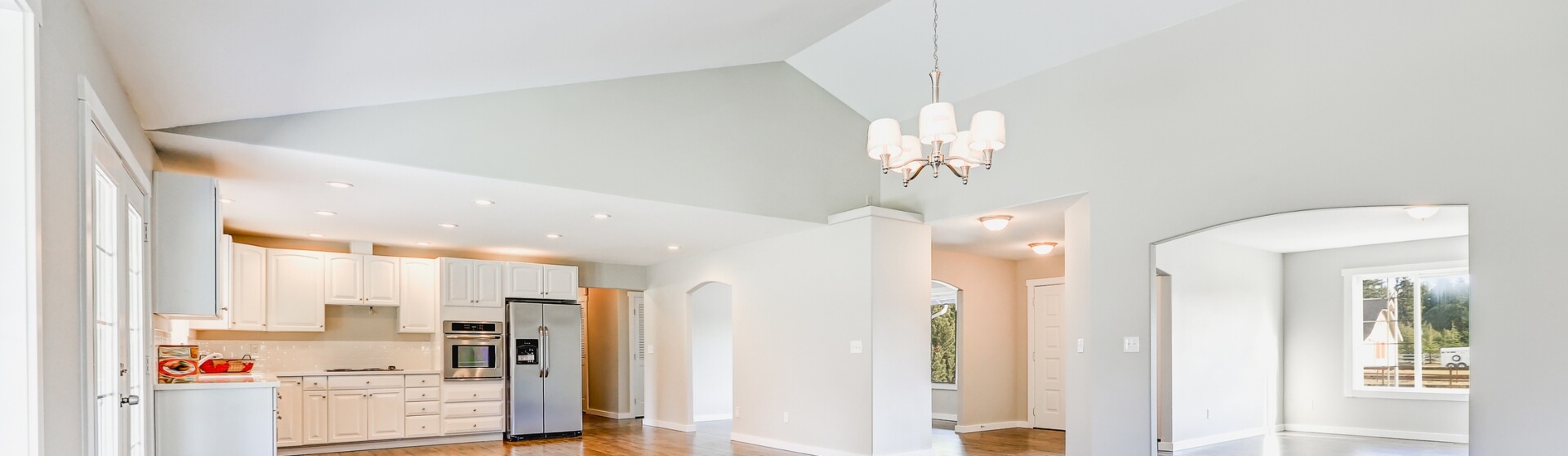
What Are Vaulted Ceilings and High Ceilings in ADUs and Are They Worth It in California?
Vaulted ceilings enhance ADUs by maximizing vertical space, increasing natural light, improving comfort, and boosting long-term property value in California when designed and built correctly.
-
ADU Trends & Insights
Custom ADU: Your Ultimate Guide
A custom ADU may cost more than manufactured or prefab units, depending on size, type, and finishes, but it offers several benefits.
-

ADU Trends & Insights
What is stormwater management for Accessory Dwelling Units (ADUs) in California?
Stormwater management for ADUs is the process of controlling and treating rainwater runoff generated by new backyard cottages or secondary homes.
-
ADU Trends & Insights
Downsizing to an ADU: Benefits, Costs, and Key Considerations
Downsizing to an ADU means moving into an Accessory Dwelling Unit—a smaller, self-contained home on your property—while renting out or repurposing your main house.
-
ADU Trends & Insights
How to Finance an ADU in San Diego
ADUs are growing popular in San Diego, offering housing for family or rental income, but demand substantial upfront investment.
-
ADU Trends & Insights
Are ADUs a good alternative to nursing homes for California homeowners?
ADUs offer California homeowners a practical alternative to nursing homes by allowing aging parents to live independently on the same property, supporting aging in place while turning ongoing care costs into a long-term home investment.
-
ADU Trends & Insights
What Qualifies as an ADU?
ADUs are reshaping the California housing market, providing homeowners with cost-effective, independent living spaces to meet diverse needs.
-

ADU Trends & Insights
When Do You Need a Survey for an ADU in San Diego?
A survey for an ADU in San Diego is typically required when the new unit is built close to property lines, situated on a sloped or irregular lot, or when local regulations mandate setback verification.
-

ADU Trends & Insights
Can You Sell an ADU in San Diego?
San Diego's pending ordinance may soon enable homeowners to sell ADUs as separate condominiums, expanding affordable housing opportunities.
-
ADU Trends & Insights
What are the universal design principles for ADUs?
Universal design principles for ADUs focus on creating safe, flexible, and comfortable homes—using features like step-free entries, wider doorways, accessible bathrooms, and intuitive layouts—so the space remains usable for people of all ages and abilities over time.
-
ADU Trends & Insights
California ADU Law: The Ultimate Guide
California has streamlined ADU construction to address the housing crisis, but development standards still apply. Check local regulations before starting your project.
-
ADU Trends & Insights
What Are ADU Owner Occupancy Requirements?
ADU owner occupancy requirements are rules that require a property owner to live on the same lot as an accessory dwelling unit, either in the primary residence or the ADU itself. These rules were historically imposed by local governments to discourage absentee landlords and preserve neighborhood character. In California, however, owner-occupancy requirements for ADUs are […]
-
ADU Trends & Insights
What Are the Best Floor Plans for ADUs?
The best ADU floor plans are goal-driven and code-compliant—using efficient layouts like studios, 1-bed/1-bath rentals, or split-bedroom designs that maximize light, privacy, and flexibility while fitting your lot and budget.
-

ADU Trends & Insights
What Is the Cost of Building an ADU in California?
The cost of building an ADU in California varies based on factors such as size, design, site conditions, utility work, and local fees. A statewide homeowner survey found that the median ADU construction cost is $150,000, or approximately $250 per square foot, providing a useful benchmark for homeowners planning an ADU. The California Department of […]
-
ADU Trends & Insights
Do You Trust Your Builder?
You can trust your ADU builder when they prove real ADU experience, proper California licensing/insurance, and clear written contracts, not just a good sales pitch.
-
ADU Trends & Insights
How to Finance an ADU Project in California
California homeowners can finance an ADU using home equity, cash-out refinancing, construction or renovation loans, and programs like San Diego’s SDHC (up to $250K), with rental income often helping offset the $200K–$450K build cost.
-
ADU Trends & Insights
What Is an ADU Cost Calculator and How Much Does It Cost to Build an ADU in California?
An ADU cost calculator helps California homeowners estimate the cost of building an accessory dwelling unit based on factors like square footage, construction type, utility work, site conditions, and finish quality. In California, ADU construction costs typically range from $100,000 to $200,000, although detached ADUs with premium finishes or difficult site conditions can exceed that […]
-
ADU Trends & Insights
How Much Does an ADU Increase Property Value?
Discover how adding an ADU can significantly boost your property value, generate rental income, and enhance long-term equity—all while making the most of your available space.
-
ADU Trends & Insights
Can an HOA Prevent an ADU in California?
If you’re part of a homeowners association and considering building an accessory dwelling unit on your property, it's key to consider any rules your HOA may have about ADUs.


