


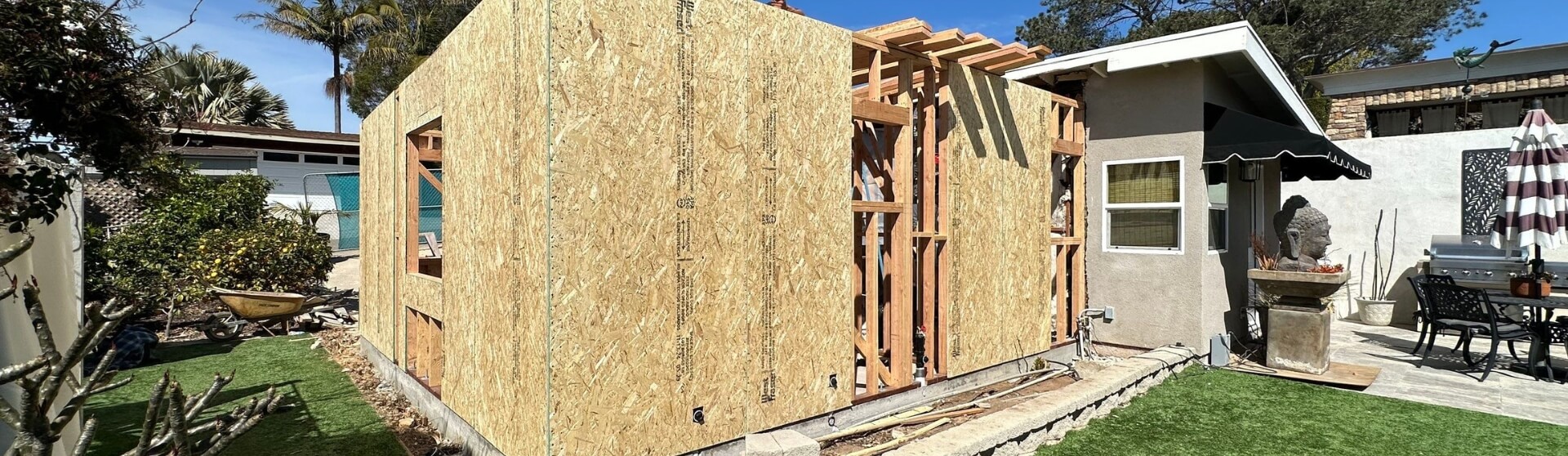
ADU vs JADU: What’s the Difference?
Explore the crucial differences between ADUs and JADUs—including size, regulations, costs, and ROI—to determine the best fit for your property and goals.
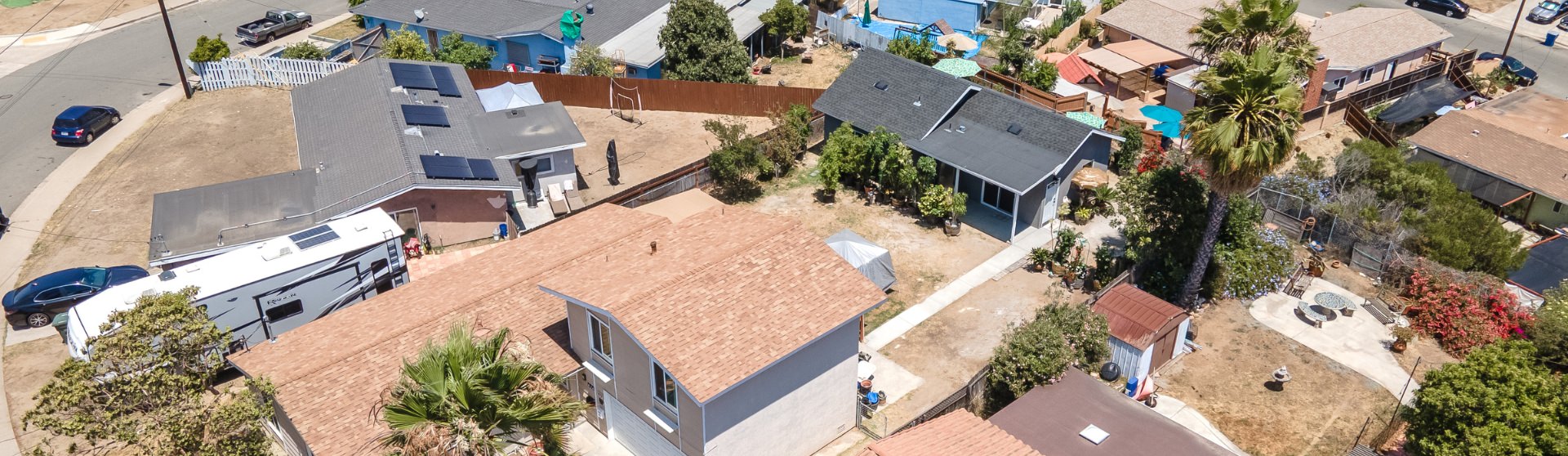
Korey Turk, with over 15 years in construction, uses his hands-on experience to design ADUs that feel like a natural part of the home.
His in-depth knowledge of the construction process allows him to create highly functional and beautiful spaces that maximize property value.

Head of Design
Korey’s goal is to bring clients’ dreams to life, designing spaces that align with their vision and make every square foot count.
His deep construction knowledge allows him to create ADUs that enhance the property’s overall value, turning vision into long-term investment.
With years spent in every role on a job site, Korey knows the intricacies of construction, making him a valuable asset in ADU design.
Korey designs ADUs that blend effortlessly with existing properties, creating a cohesive, “meant-to-be” feel.
Korey’s designs prioritize functionality, ensuring every ADU meets the practical needs of the homeowner without sacrificing style.
My top posts
Explore the crucial differences between ADUs and JADUs—including size, regulations, costs, and ROI—to determine the best fit for your property and goals.

A California 20-Day Preliminary Notice is a required filing for most ADU projects that subcontractors and suppliers must send within 20 days of providing labor or materials, notifying owners, contractors, and lenders.
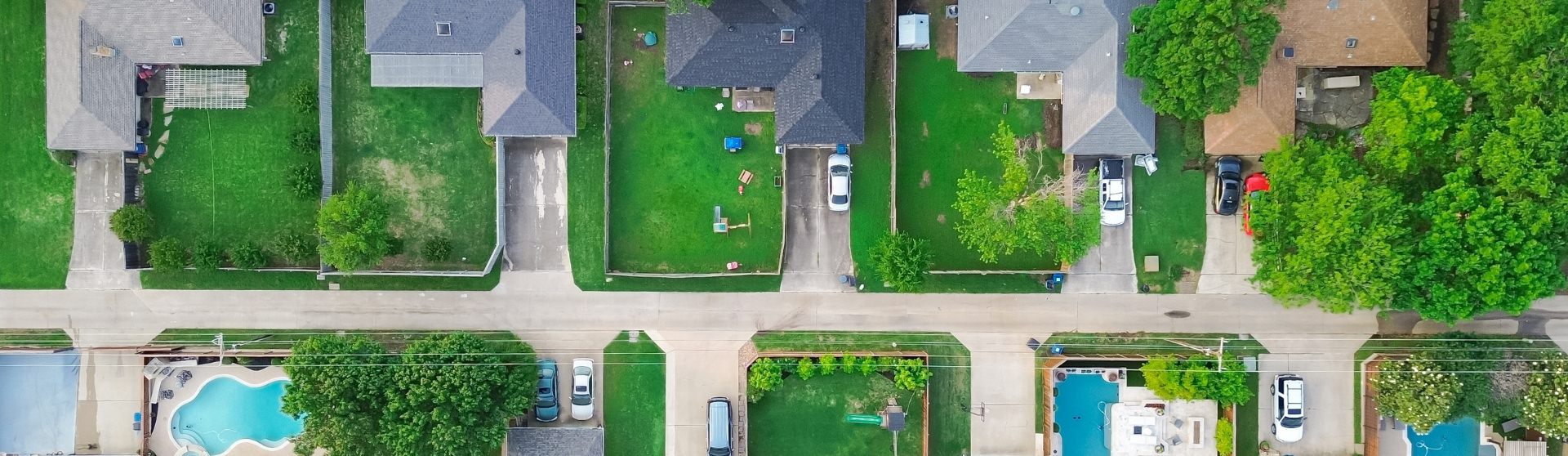
If you’re part of a homeowners association and considering building an accessory dwelling unit on your property, it’s key to consider any rules your HOA may have about ADUs.
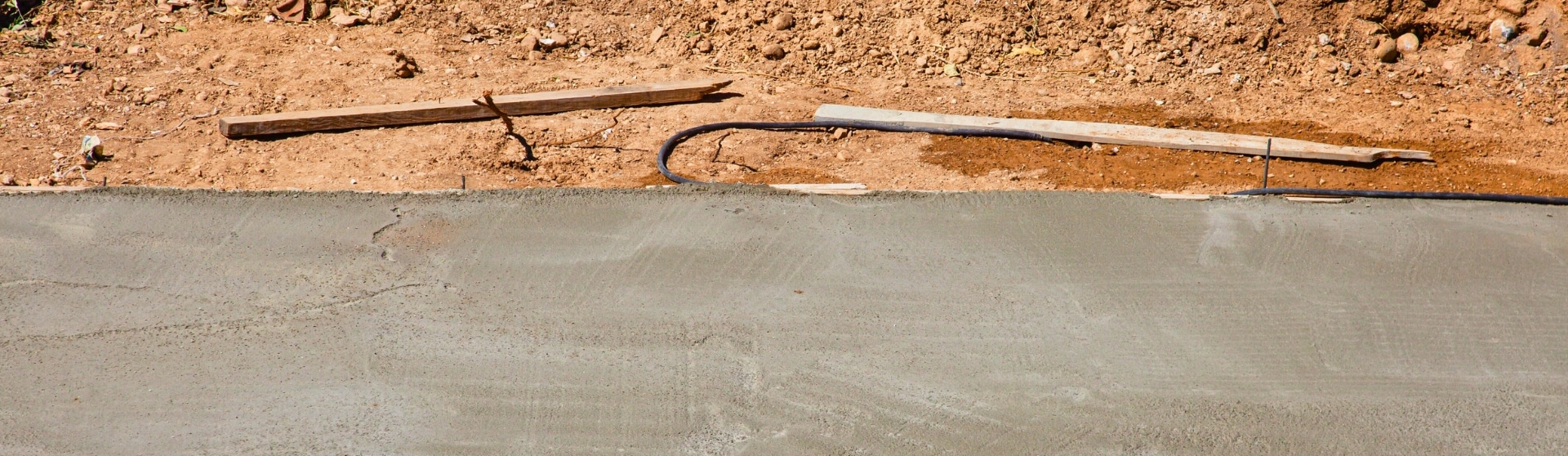
An experienced ADU builder ensures safety and durability, but understanding the basics helps you make smarter budget and timeline decisions.

Stacked ADUs are two fully independent accessory dwelling units built vertically in a single two-story structure, allowing California homeowners to add multiple homes on one lot without increasing the building footprint when local height and zoning rules allow.